Sustainability in bakery production – with X-ray technology

The safest way to check products for foreign bodies is to inspect them when they are in sealed primary packaging. As a closing mechanism, metal clips pose a special challenge. Mesutronic’s X-ray inspection systems have been the solution for the Austrian company Rudolf Ölz Meisterbäcker GmbH & Co KG in Dornbirn.

Quality assurance in small-scale enterprises

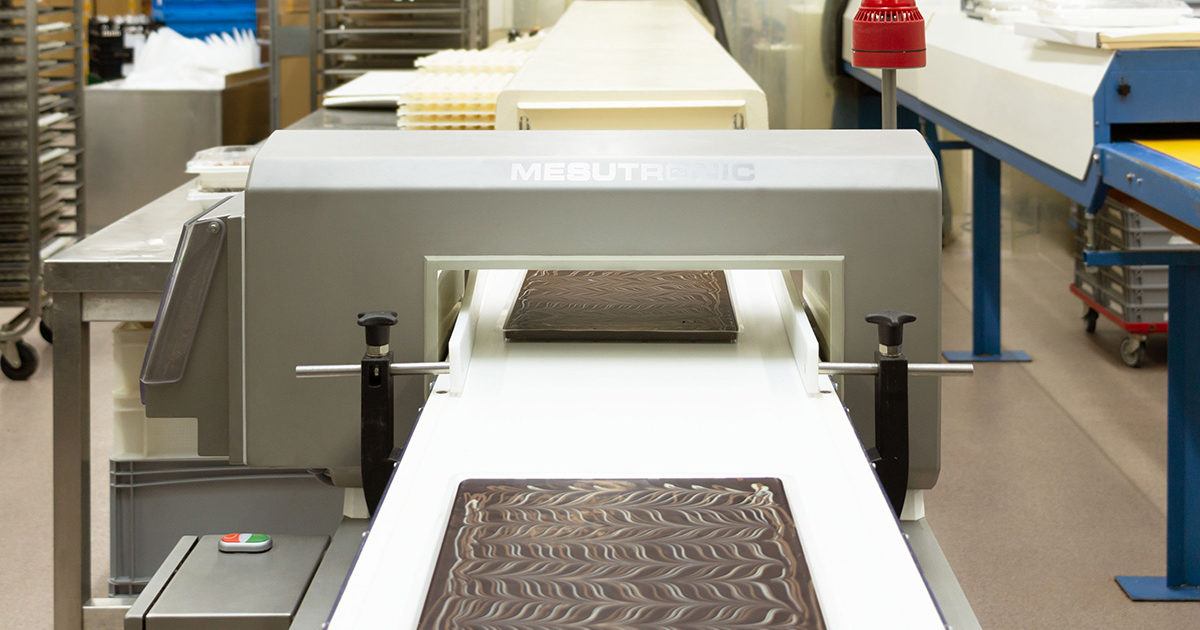
Metal detection - perfectly integrated into the production line

Metal detection – perfectly integrated into the production line


Quality assurance between artisanal and industrial production

For companies with a small-scale manufacturing background, such as Seidl Confiserie GmbH, foreign body management programs must be tailored to the individual production processes. Flexibility, innovation and usability are particularly important here.

From Kenya to the Upper Palatinate

In general, the quality of the food served near motorways leaves a lot to be desired. But not on the A3 motorway between Regensburg and Nuremberg. Right next to the junction for the town of Laaber, you can find delicacies from Africa and all over the world, refined by Seidl Confiserie GmbH. Their story began in the late 80s with Managing Director Johann Seidl’s passion for travel and chocolate.

The first product, an edible milk jug in a delicate light brown, is still an integral part of the product portfolio today. The macadamia nut, whose triumphant progress across Europe’s confectionery shelves began here, is also still one of the cornerstones of the company. In contrast to the modest early days, over 85 employees now process more than 250 tons of raw materials annually, manufacturing a wide variety of products such as pralines, spreads, snacks, chocolates and baked goods.

In addition to ever-growing online sales in Germany, Japan is the next company target. “Unique products of the highest quality, such as our new praline cake, are the key to this. They will help us to gain a foothold in this demanding market,” comments Johann Seidl.

Naturally, continuous growth means upgrading production to industrial standards. Nevertheless, at Confiserie Seidl, the core values of an artisanal manufacturer are still evident. These are crafting skills, an eye for detail, the drive for innovation and, above all, love for the product.
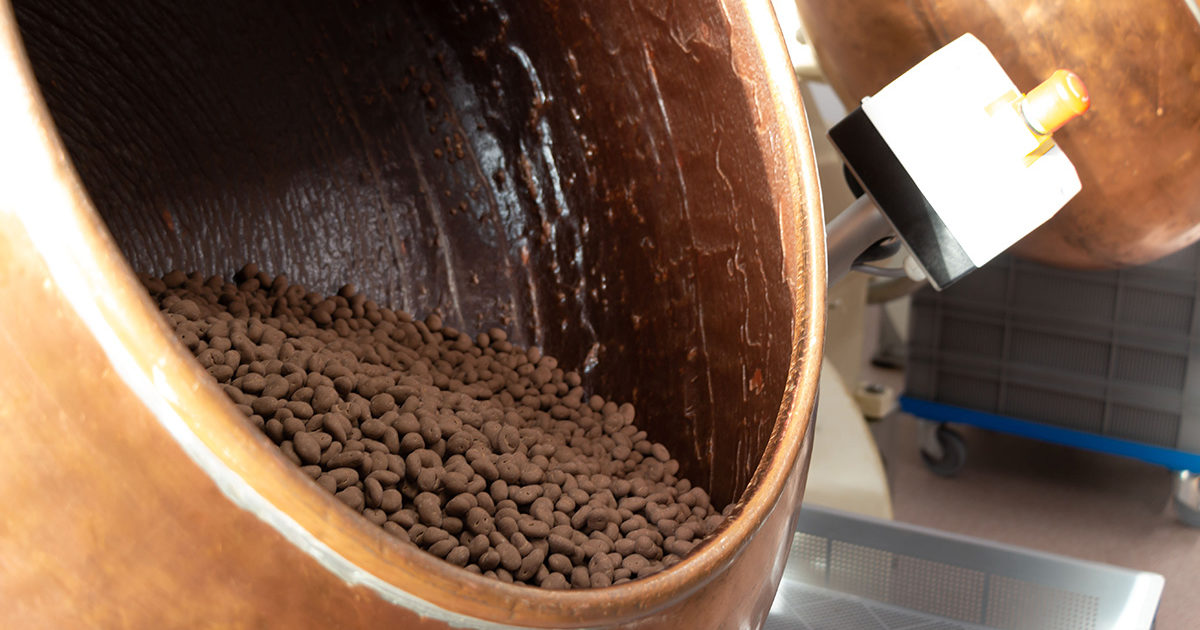
 

Making good things even better, coating almonds

Making good things even better, coating almonds


Small batches result in complex tasks

Expanding the idea of a small-scale manufacturer to over 1,000 individual products in different pack sizes brings unique challenges. Particularly when large quantities of the most popular products have to be produced or large orders fulfilled. Up to 12 different products are run on one line per production shift. Delays in setting-up therefore have a massive impact on daily production. Short and efficient cleaning routines are equally important. Individual customer requests or new types of products have to go into serial production quickly in order to meet delivery times or to satisfy the latest consumer trends.

“Our business is demanding, but it’s never boring,” says Jakob Hilber with a grin. As Marketing Manager, in collaboration with Mr Seidl, he is the person who repeatedly confronts the production department with new creative challenges.

Profitable through tradition and innovation

Various factors are decisive in being able to solve such complex tasks profitably. First of all, your own employees must be flexible and excellently trained. For the majority of products, one or more steps are carried out by hand. This includes filling the cream-cocoa-almonds in the coating drum to delicately writing an individual chocolate telegram.

Just as important is a machine program that is perfectly tailored to our application. At Seidl Confiserie GmbH, lovingly restored older systems are used for special jobs, such as an old fine grinding mill. It is used for the sugar layer of the red-coated peanuts everyone remembers from childhood. By contrast, modern vertical form fill seal machines or pouring stations are also in use. When it comes to quality assurance in particular, the company does not just rely on every employee’s trained eye.

“The high number of manual production stages helps us avoid many quality defects before they occur”, says Johann Seidl, “but there are also problems that cannot be identified by touch or sight.” In a company that processes such a large number of natural products, the presence of foreign bodies is always a relevant subject for risk assessment. For detecting metal, Mesutronic GmbH from Kirchberg im Wald is the partner of choice.
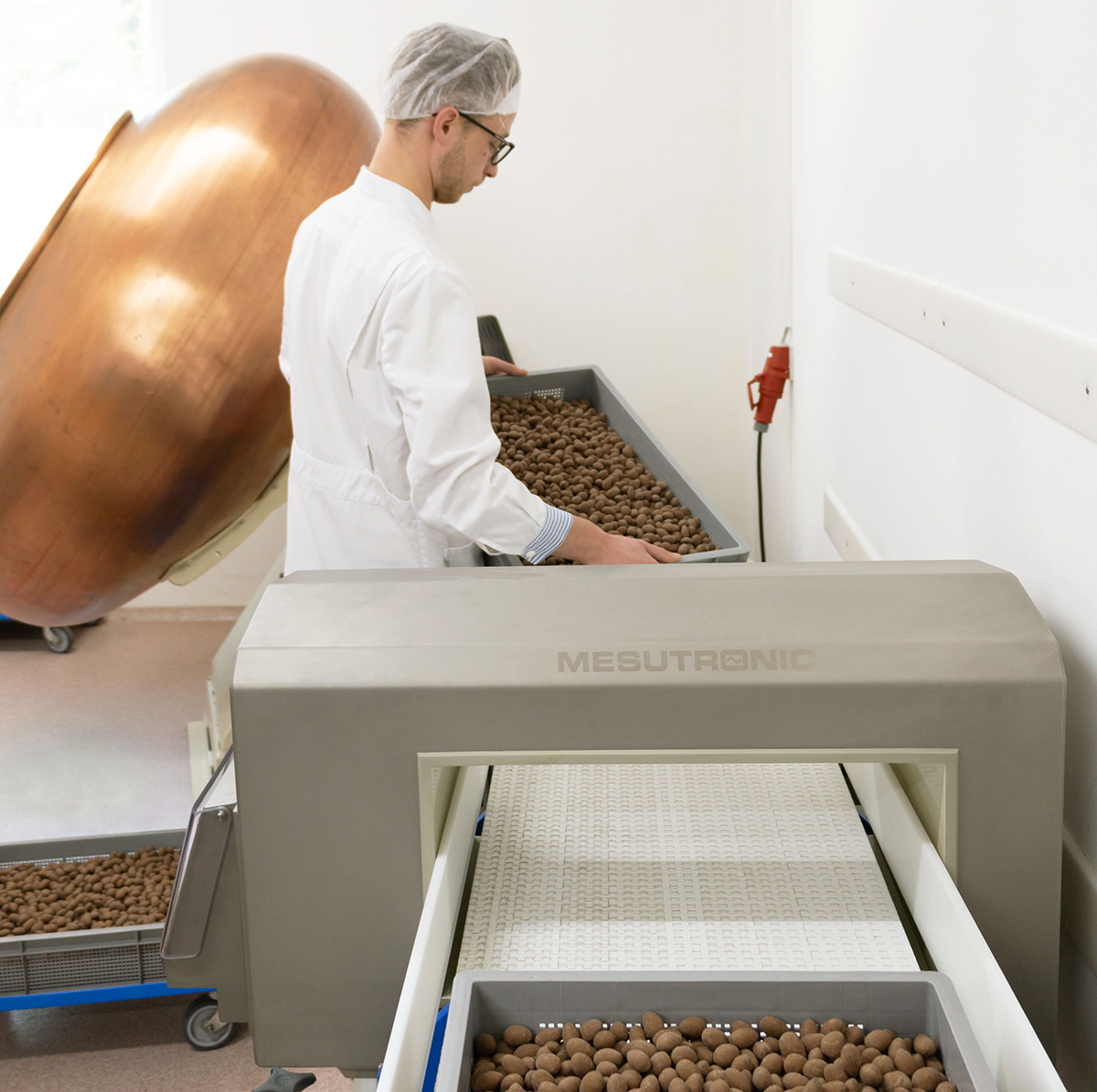
 

Uncompromising safety for all pack sizes

Uncompromising safety for all pack sizes


From specialists for specialists

The METRON 07 CI tunnel metal detectors used on TRANSTRON conveyor belts perfectly meet the requirements of flexibility, ease of cleaning and high performance. Setting up new products is intuitive and quick for every operator. Large, smooth running rollers, guided cable guiding and a design with as few protruding parts as possible enable simple changes of location from line to line while minimizing the risk of damage.

AMD07 electronic series devices boast exceptional performance in detection. In this way, a generous opening size can be chosen in the layout phase without breaking good manufacturing practices. During operation, this allows a broad product portfolio to be examined across minimal different system sizes. Traceable and seamless reporting can be done directly on the machine itself without necessarily having to establish a connection to the company network.

“The requirements of manufacturing companies with an artisanal background are well known to us,” explains Christian Boxleitner, Director of Sales at Mesutronic . “When it comes to machine engineering, we also lean in an artisanal direction. Most of our systems are specially modified for each customer and thereby perfectly tailored to their needs.”

It is precisely this focus on satisfying customer needs to the highest level that unites Seidl Confiserie GmbH and Mesutronic GmbH. This results in a solid partnership, complementing each other like nuts and chocolate.
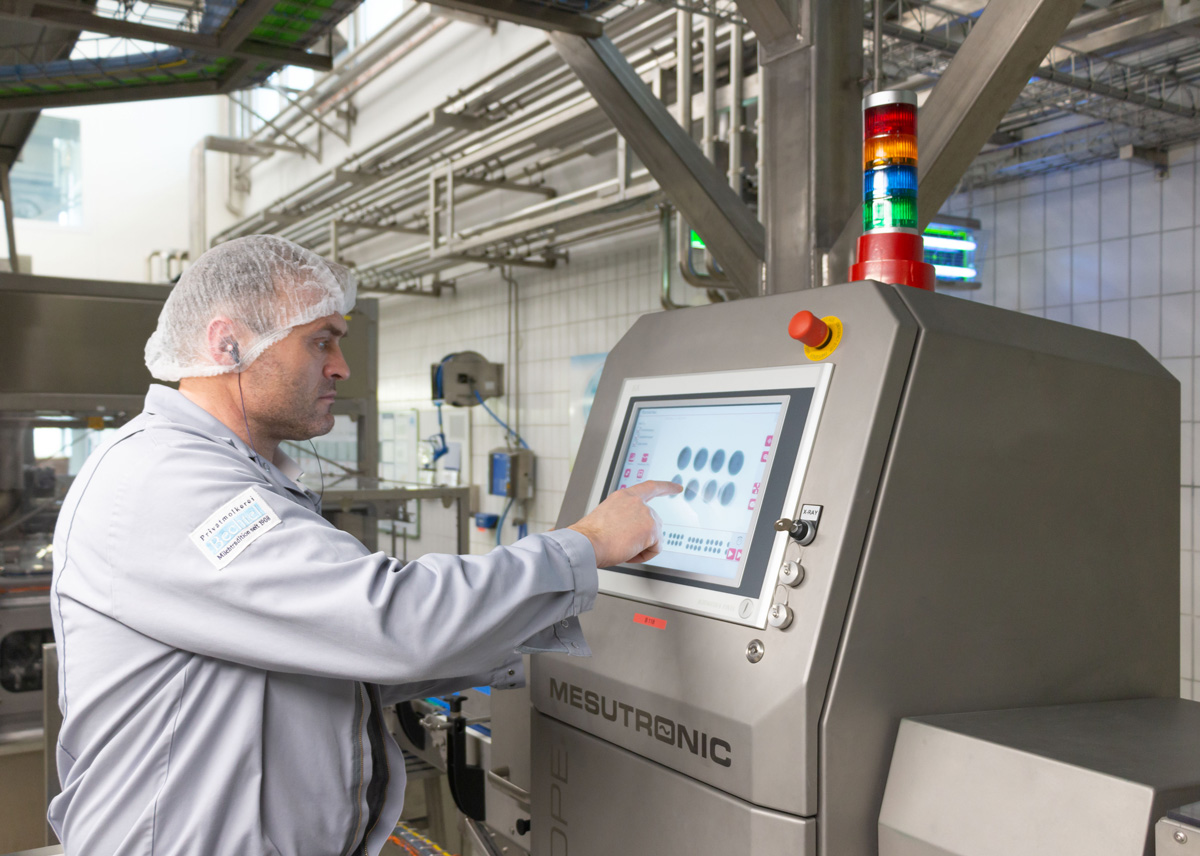
Creating added value with X-ray technology

Modern X-ray technology – clear and easy to operate

Modern X-ray technology – clear and easy to operate


Creating added value with X-ray technology

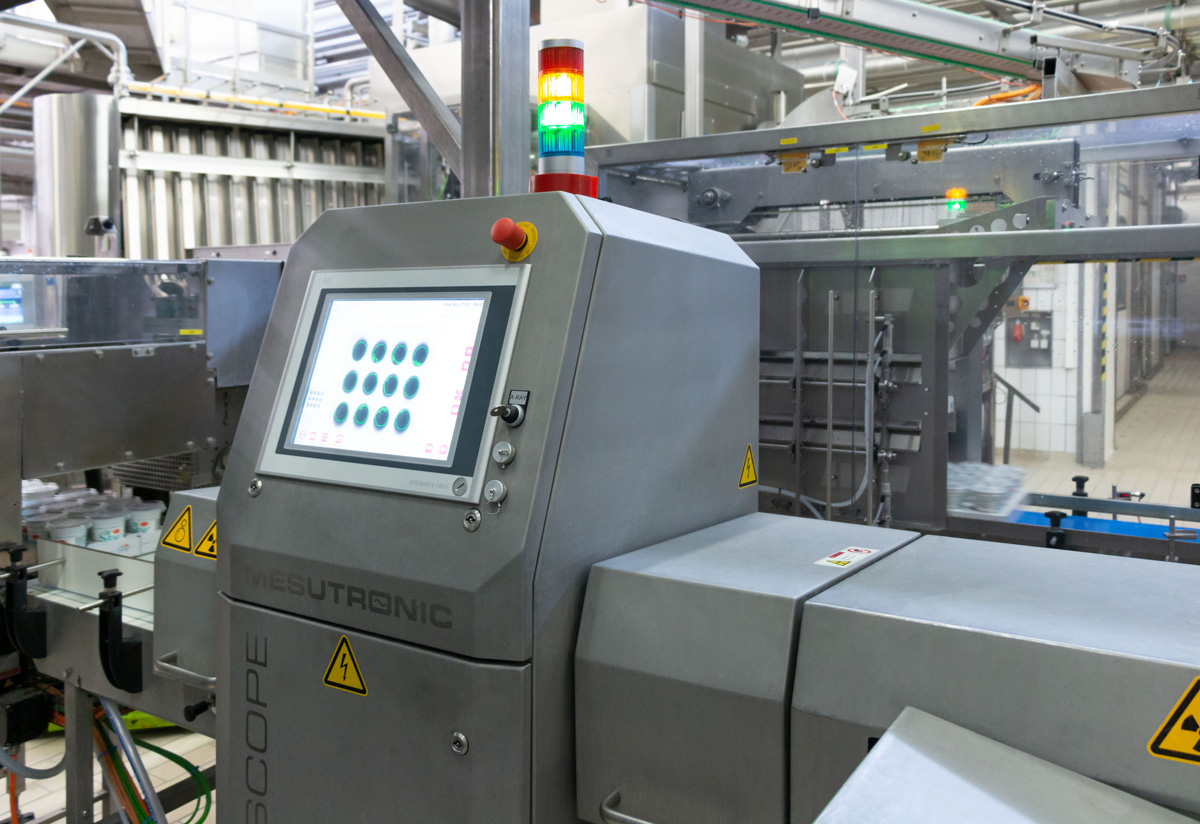
X-ray systems secure the product quality and improve the production sequences at the Bavarian company Privatmolkerei Bechtel.

From a small brook to a large river

The picturesque Naab meanders gently through the Upper Palatinate. It grows from a brook to a river over its course from the source near Weiden to where it flows into the Danube near Regensburg. The Schwarzenfeld-based Privatmolkerei Bechtel has also grown from modest beginnings into a large company in the 110 years of its history. Managing director René Guhl is the head of the family company in the fourth generation. Over one million litres of milk are processed daily at the constantly expanding company headquarters. The main products are yoghurt, liquid milk and cream cheese. Production runs 365 days a year in a four-shift system.

Challenging production process

The processing of raw milk into consumer products consists of complex steps. Products such as quark, hard cheese, drinking milk or butter are produced by means of separators, butter churning machines, milk pasteurisers, filling and packing machines and many more besides. The individual process sequences differ with each end product. The mixture of manual work and the use of machinery is a further challenging feature of the manufacture of milk products.

Hazards are created by material abrasion on the processing machines, wire breakages or the ingress of foreign materials through maintenance work on the building and plants. Even with the greatest of care as at Privatmolkerei Bechtel, safeguards therefore cannot be dispensed with along the way to zero-error production. In addition to the safeguarding performance itself, however, the acquisition of operating data and the complete traceability of these control systems must be possible.


Double-track ejection for minimum wastage

Double-track ejection for minimum wastage


Security with a benefit

“When it came to foreign body inspection it quickly became clear that conventional metal detectors are not suitable for many of our products”, says Dr. Thomas Strixner, who is responsible for the “Quality and Product” business division at the dairy works in the Naab valley. Metallic components are part of the packaging for many products, a typical example being the aluminium seals of yoghurt pots. “After an in-depth consideration of the alternative – industrial X-ray technology – we quickly became aware of further benefits.” Most available X-ray scanners use standardised Industrial PCs with the corresponding operating systems and are thus very simple to integrate into company networks. “A great advantage of this technology was also that even the weighing of the individual products in the bulk packaging was possible with the appropriate algorithms.”

Delivery form represents a special problem in the production of yoghurt. The yoghurt pots are filled and then packed into cartons immediately afterwards. The weighing of the individual products is thus no longer possible. However, an X-ray scanner is capable of visually separating the products and weighing them by means of density differences. Using classic weighing technology it might not be possible to discover a single underweight yoghurt pot, because several slightly overfilled beakers are possible in a carton. The total weight would then lie within the tolerance despite a single faulty product.


Weighing by density and foreign body inspection in combination

Weighing by density and foreign body inspection in combination


Networked and reliable – the right partner

“The integration of X-ray inspection systems into existing production lines is always a challenge. In this case Mesutronic GmbH offered us the best package for the project planning, the commissioning and the training of personnel”, says Dr. Strixner. A total of six X-ray inspection systems of the type “easyScope” check various products, including inspecting butter in two-track operation or quark in cartons for contamination with foreign bodies or quality defects. They are integrated into the production data acquisition system as well as the company network.

This enables the central acquisition of OEE data on the one hand and the traceable and archive-compliant reporting of performance tests on the other. Apart from that, the manufacturer’s technicians can access the plants for remote maintenance after clearance by Privatmolkerei Bechtel.

Karl-Heinz Dürrmeier, managing director of the specialists for foreign body detection from Lower Bavaria, has a clear opinion when it comes to connectivity: “In the era of digitisation and Industry 4.0 it’s no longer enough just to supply a self-contained, good machine. Our systems are networked in a complex production environment and actively contribute to the supply of an error-free product of the highest quality to the consumer.”

This final goal is shared by both Privatmolkerei Bechtel and Mesutronic GmbH.

Four-eyes principle regarding contaminant checks

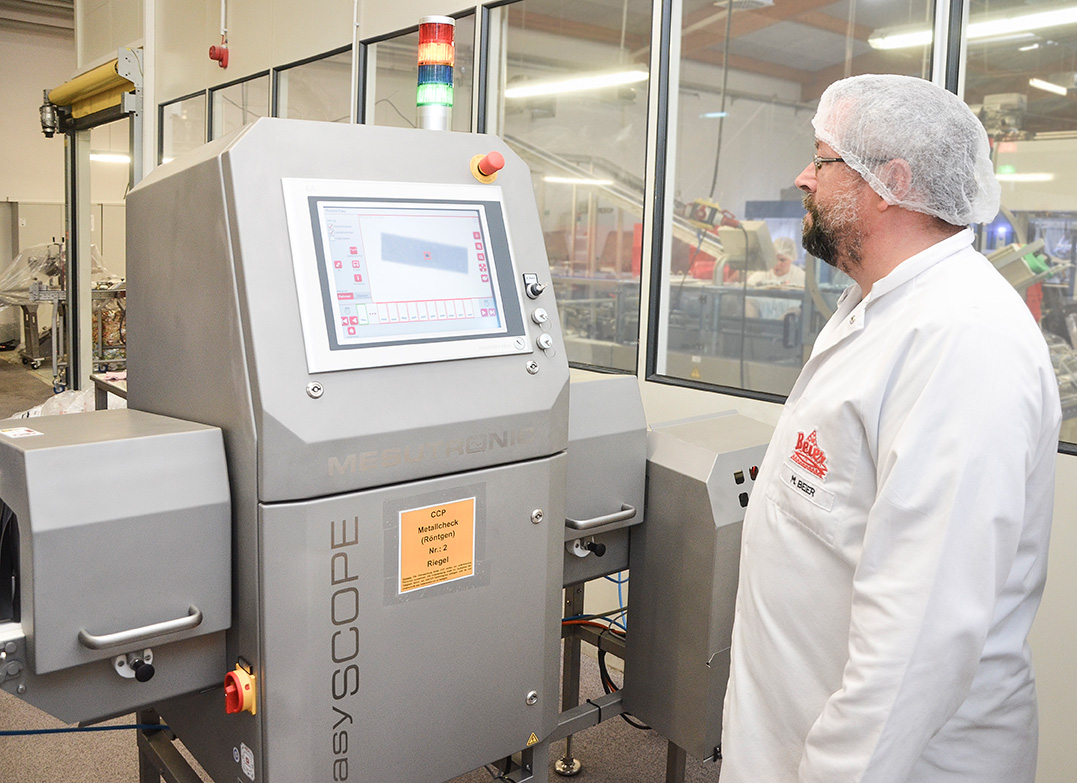
The easySCOPE contaminant detector in action

The easySCOPE contaminant detector in action


Extensive safety by means of combining metal detectors and x-ray scanners at the works of the Bavarian confectionery production company Otto Beier Waffelfabrik GmbH.

The high-tech safety technology provided by the company Mesutronic is currently ensuring contaminant-free end products at Otto Beier Waffelfabrik GmbH in Miltach/Upper Palatinate (Cham district). Modern metal detectors and x-ray scanners are utilised to check around one million cereal bars per week, before these are stocked on shop shelves.

Quality as a tradition

There is an aromatic scent in the air of the production hall: Up to 100 different raw materials, such as dried fruit, nuts or cereals are added to the cereal bars. “In order to ensure that our end consumers only have access to clean products, we have taken precautions by way of a double safety system,” says Markus Beier (43), Commercial Managing Director of Otto Waffelfabrik GmbH, which applies strict criteria in terms of the respective quality. This is in line with a tradition, which has been practised for more than 80 years.

And today more than ever, as a number of fruit and cereal bars are being produced for reputable manufacturers, in addition to the waffle products and foamy sugar goods produced and sold from the own brand. In this context, the company Beier is consulted as a specialist, especially in terms of products associated with organic goods, baby quality or sustainability.

The risk of contamination

The company Beier only utilises the best possible raw materials. But by processing natural products, there is always a risk of production contamination by various means. Amongst other things, Beier buys approximately 3,000 tons of fruit per year: “It is normal that during harvest, stones, metal particles or pellets from hunters may get into the raw material,” according to Markus Beier. Nutshells also pose an unavoidable risk in terms of raw materials. The company Beier decided to explore as to how the safety of the end consumer could be further improved. In principle, it is possible to apply two established processes in order to check the respective end products, x-ray checks and inductive metal detection.


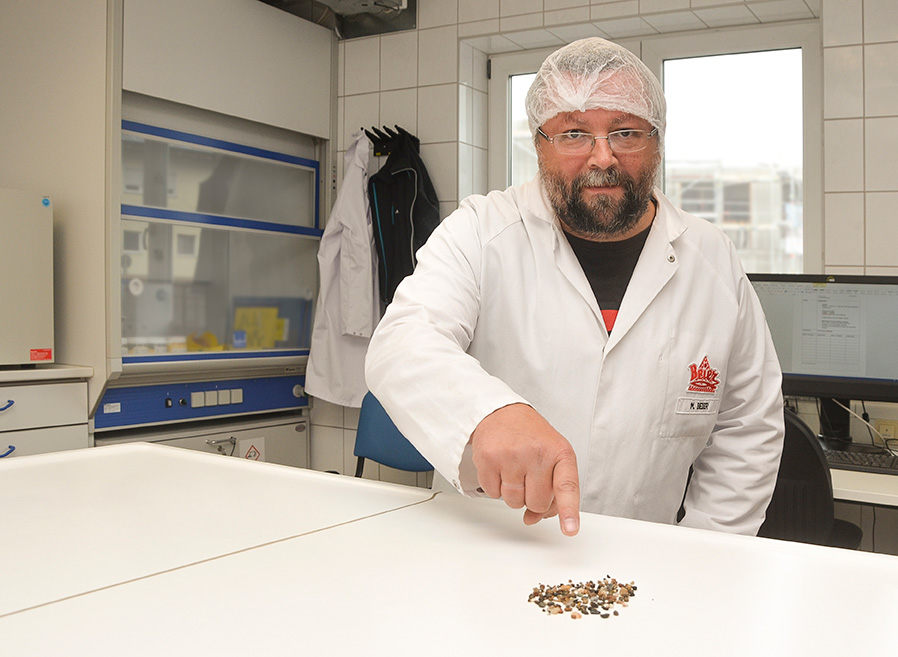
Markus Beier with contaminants (stones) identified by x-ray scanners over a period of 6 months

Markus Beier with contaminants (stones) identified by x-ray scanners over a period of 6 months


X-ray inspection systems – versatile and innovative

X-ray detection is an imaging process. The radiation produced by the x-ray generator is transformed into an image by means of the diode array in the receiver and a processing unit. The product to be checked blocks part of the radiation and is therefore illustrated by means of various shades of grey. An increase in density, thickness and atomic mass reinforce this effect, the image will become darker and darker. The respective contaminations, such as most metals, glass, high-density plastic or stones have a high density and atomic mass. Therefore, they can be clearly distinguished from the surrounding product, even in case of a relatively low level of thickness, and may therefore be identified. However, very thin metallic contaminations, such as fine shearing or metallised foil may be problematic. If not enough radiation is absorbed, the contamination cannot be recognised by the scanner’s image-processing algorithms.

Inductive metal detectors – tried and tested specialists

Metal detectors, which work in line with the so-called “balanced coil” principle, are able to check products by means of an alternately poled magnetic field, which induces electric tension in the receiving coils. You will be able to identify metallic contaminations on the basis of electric conductibility and magnetic permeability. It is even possible to identify contaminants with a low density or thickness. However, thin metallised packaging components may, in turn, lead to a reduction in the general level of detection.

Especially in terms of the products of the Firma Beier, which are to be well checked, the level of detection achieved by the metal detector in regard to iron and aluminium particles is generally better than the results achieved by the x-ray scanner. Regarding the utilisation of metallised packaging components, this is more difficult. For these products, x-ray scanners are almost always superior in regard to metals.

Risk evaluation and identification of solutions

Due to the various unavoidable risks concerning raw materials, and following a HACCP-compliant risk evaluation, the only suitable tool for contaminant checking appeared to be x-ray technology. This technology identifies the broadest range of contaminants within the finished products. Furthermore, the technology offers additional quality assurance tools, such as counting options or checks for breakage. Following the finding, a suitable partner was to be identified. “We decided to go with the easyScope x-ray inspection systems provided by Mesutronic GmbH. They were able to offer an optimum compromise in regard to user friendliness and detection accuracy, the implementation project and respective start-up were carried out without any problems,” says Alexander Beier (45), Technical Managing Director of Otto Beier Waffelfabrik GmbH.


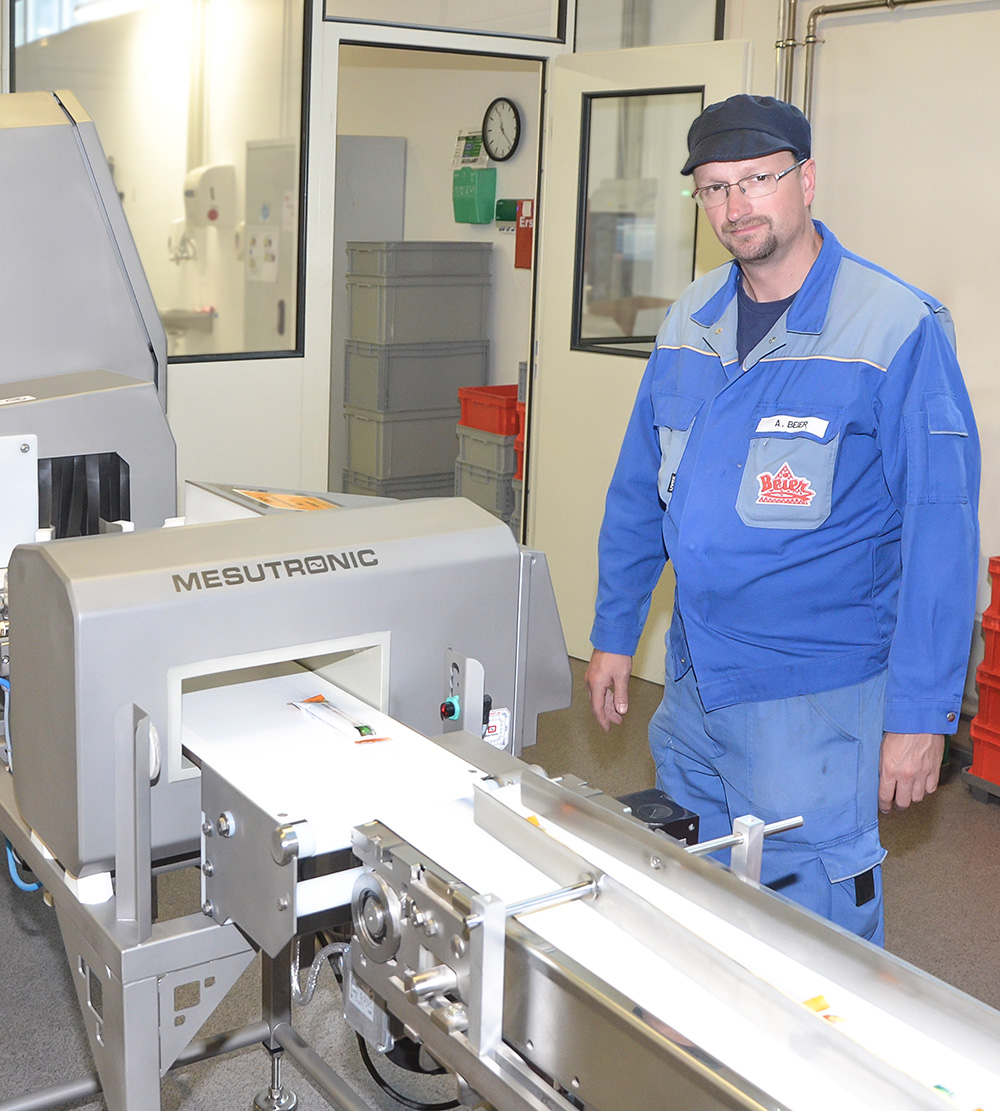
Double safety at the line - Alexander Beier in the process of checking the equipment installed by Mesutronic

Double safety at the line – Alexander Beier in the process of checking the equipment installed by Mesutronic


The silver bullet – combining technologies and protecting consumers

In order to protect consumers as best as possible, the company Beier not only decided to invest in modern x-ray systems, but also to combine both processes. All lines were furthermore equipped with Metron 07 CI tunnel metal detectors. The metal detection systems specialise in all types of metallic contaminations.

Firstly, and as far as possible, they remove all bars, which are contaminated with pellets, shearing as well as pieces of wire or similar items. The x-ray systems, in turn, specialise in non-metallic contaminations, such as stones, shells or glass. They also improve the detection performance in terms of products with metallised packaging. Per line, up to 600 bars per minute are forwarded to secondary packaging as well as delivered to shops and, finally, end consumers. And all this with a certain advantage in regard to quality, which both the company Otto Beier Waffelfabrik GmbH, as well as Mesutronic GmbH vouch for.