Creating added value with X-ray technology
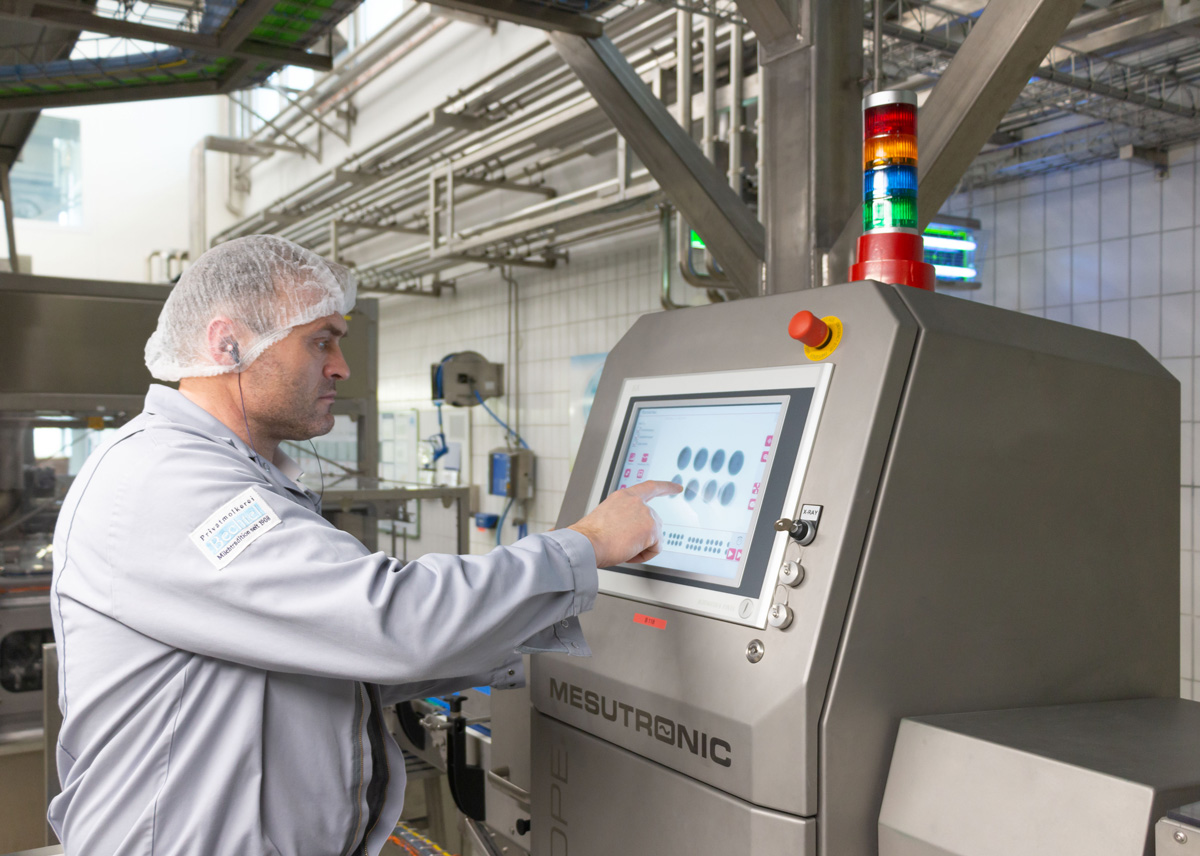
Modern X-ray technology – clear and easy to operate

Modern X-ray technology – clear and easy to operate


Creating added value with X-ray technology

X-ray systems secure the product quality and improve the production sequences at the Bavarian company Privatmolkerei Bechtel.

From a small brook to a large river

The picturesque Naab meanders gently through the Upper Palatinate. It grows from a brook to a river over its course from the source near Weiden to where it flows into the Danube near Regensburg. The Schwarzenfeld-based Privatmolkerei Bechtel has also grown from modest beginnings into a large company in the 110 years of its history. Managing director René Guhl is the head of the family company in the fourth generation. Over one million litres of milk are processed daily at the constantly expanding company headquarters. The main products are yoghurt, liquid milk and cream cheese. Production runs 365 days a year in a four-shift system.

Challenging production process

The processing of raw milk into consumer products consists of complex steps. Products such as quark, hard cheese, drinking milk or butter are produced by means of separators, butter churning machines, milk pasteurisers, filling and packing machines and many more besides. The individual process sequences differ with each end product. The mixture of manual work and the use of machinery is a further challenging feature of the manufacture of milk products.

Hazards are created by material abrasion on the processing machines, wire breakages or the ingress of foreign materials through maintenance work on the building and plants. Even with the greatest of care as at Privatmolkerei Bechtel, safeguards therefore cannot be dispensed with along the way to zero-error production. In addition to the safeguarding performance itself, however, the acquisition of operating data and the complete traceability of these control systems must be possible.


Double-track ejection for minimum wastage

Double-track ejection for minimum wastage


Security with a benefit

“When it came to foreign body inspection it quickly became clear that conventional metal detectors are not suitable for many of our products”, says Dr. Thomas Strixner, who is responsible for the “Quality and Product” business division at the dairy works in the Naab valley. Metallic components are part of the packaging for many products, a typical example being the aluminium seals of yoghurt pots. “After an in-depth consideration of the alternative – industrial X-ray technology – we quickly became aware of further benefits.” Most available X-ray scanners use standardised Industrial PCs with the corresponding operating systems and are thus very simple to integrate into company networks. “A great advantage of this technology was also that even the weighing of the individual products in the bulk packaging was possible with the appropriate algorithms.”

Delivery form represents a special problem in the production of yoghurt. The yoghurt pots are filled and then packed into cartons immediately afterwards. The weighing of the individual products is thus no longer possible. However, an X-ray scanner is capable of visually separating the products and weighing them by means of density differences. Using classic weighing technology it might not be possible to discover a single underweight yoghurt pot, because several slightly overfilled beakers are possible in a carton. The total weight would then lie within the tolerance despite a single faulty product.
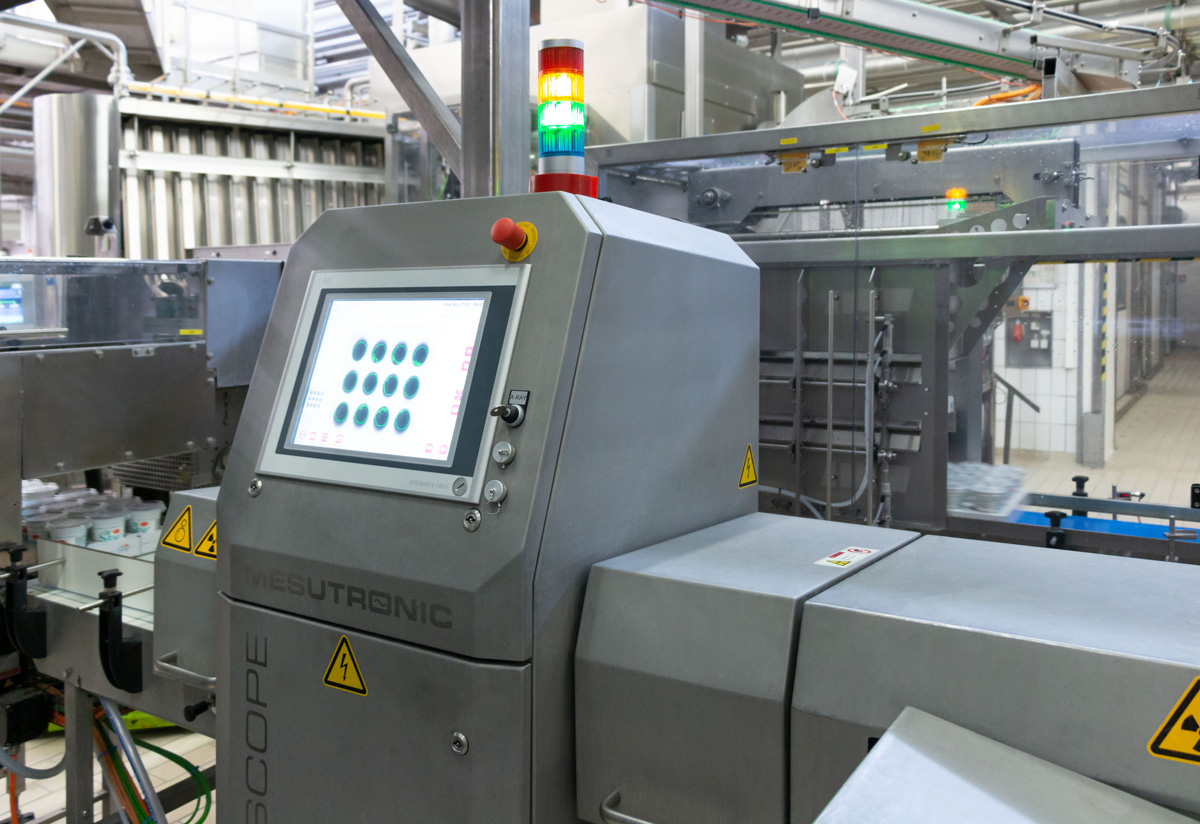
 

Weighing by density and foreign body inspection in combination

Weighing by density and foreign body inspection in combination


Networked and reliable – the right partner

“The integration of X-ray inspection systems into existing production lines is always a challenge. In this case Mesutronic GmbH offered us the best package for the project planning, the commissioning and the training of personnel”, says Dr. Strixner. A total of six X-ray inspection systems of the type “easyScope” check various products, including inspecting butter in two-track operation or quark in cartons for contamination with foreign bodies or quality defects. They are integrated into the production data acquisition system as well as the company network.

This enables the central acquisition of OEE data on the one hand and the traceable and archive-compliant reporting of performance tests on the other. Apart from that, the manufacturer’s technicians can access the plants for remote maintenance after clearance by Privatmolkerei Bechtel.

Karl-Heinz Dürrmeier, managing director of the specialists for foreign body detection from Lower Bavaria, has a clear opinion when it comes to connectivity: “In the era of digitisation and Industry 4.0 it’s no longer enough just to supply a self-contained, good machine. Our systems are networked in a complex production environment and actively contribute to the supply of an error-free product of the highest quality to the consumer.”

This final goal is shared by both Privatmolkerei Bechtel and Mesutronic GmbH.
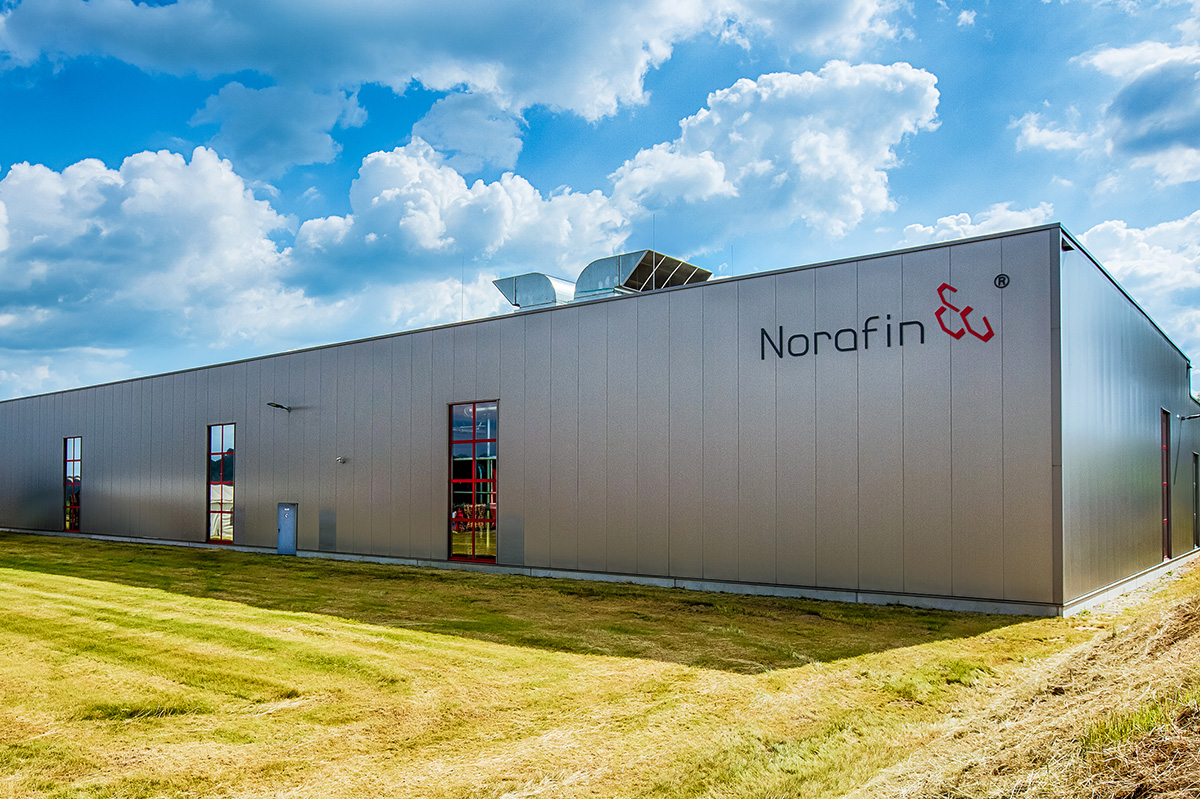
Protection for specialists

Norafin Industries (Germany) GmbH

A visit to Norafin Industries (Germany) GmbH, one of the world’s leading manufacturers of special nonwoven fabrics. The company produces innovative, hydroentangled and needle-punched nonwoven fabrics for numerous applications that surround us in many areas of our life as high-tech components. They protect, filter, clean, air-condition and create comfort and safety. Companies such as Norafin therefore make an important contribution to an environment worth living in. To guarantee this high quality, metal detectors are an indispensable aid for plant protection and quality assurance.

The company was founded in 1985 and its headquarters have been in Mildenau in the Erzgebirge (Ore Mountains) since 1997, where it employs 193 people and had a turnover of 36 million Euros last year. In 2018 the company completed the construction of its production facility in Mills River, North Carolina, USA. 36 employees found a new workplace on a floor area of 7,000 m². And not only that: with the construction of a production facility in North America, the company can offer an even better service to its customers, which include a company that makes protective clothing, and further expand and strengthen its position in the market. For instance, almost every protective jacket used today by the fire department in the USA already contains a heat and fire-resistant protective barrier made of nonwoven fabric from Norafin. “When the fire department’s operatives go out to fight fire, their protective suits often contain 2 to 3 layers of the Norafin product”, explains Norafin’s CEO André Lang. Other, but no less demanding quality criteria apply to other applications in the fields of industry, medicine, composites and filtration. “Whatever our customers demand from us, that is also precisely what we expect from our partners. That’s why we only cooperate with the best”, says André Lang.

When it comes to metal detection, the company relies on Mesutronic GmbH from Kirchberg in Wald, Lower Bavaria, Germany, which leads in the textile industry with its metal detectors. To achieve optimum process and quality assurance, beam and flying conveyor detectors are used in the different process stages of the nonwoven fabric production. Primary, artificial and natural fibres are used, which are manufactured according to a proprietary recipe – free from metallic contaminants.

However, fibre openers and carding machines with metallic tools are used in the further processing, e.g. for cutting open bales and manufacturing the nonwoven fabrics. If these tools break, they can not only negatively affect the properties of the product, but also endanger the entire production. For that reason Norafin uses the Metron 05 Powerline metal detector in the fibre transport. This detector can be inserted directly into the pipeline. Metals can also generate sparks in these areas and thus start a fire. Metal detectors and spark detectors are therefore often integrated together in pipelines. Through their use at the start of production, the ingress and distribution of metal contaminants in the further process can be minimised without the risk of having to scrap finished nonwoven fabric.

In the subsequent manufacturing process, needle punching and extremely variable hydroentanglement take place for the specialisation of the nonwoven fabric. With mechanical needle-punching, the downstream production plants are normally protected by beam-shaped metal detectors. Damage to the plants caused by needle breakage are usually very expensive and the loss of production in the case of a high production density can barely be compensated.

In accordance with Norafin’s strict quality assurance concept, the nonwoven fabrics are guided over a segmented detector at the end of the manufacturing process before being made up. Very fine metal parts such as a broken fragment of the tip of a needle are reliable detected with this system of the type Metron 04 Profiline. Depending on the version, the position of the foreign body can be located with an accuracy of 300 or 150 mm. The detection system can operate without any problem under the varying process conditions with production speeds of up to 2 m/s and product temperatures of up to 120 °C.

Those who manufacture components for protective equipment, sterile covers for operating theatres in hospitals, room air filters and even flax wallpapers for improving the room climate are working at the high end of nonwoven fabric development. The high expenditure and extraordinary quality standards that are characteristic of the production at Norafin resulted in 2017 in the company winning the award for the best product in the category “Industrial Textiles” at the Future Textiles Awards, which are presented by the World Textile Information Network (WTiN). A key factor in the attainment of such high quality goals is the selection of suppliers that share these goals. Mesutronic is Norafin’s partner when it comes to metal detection.